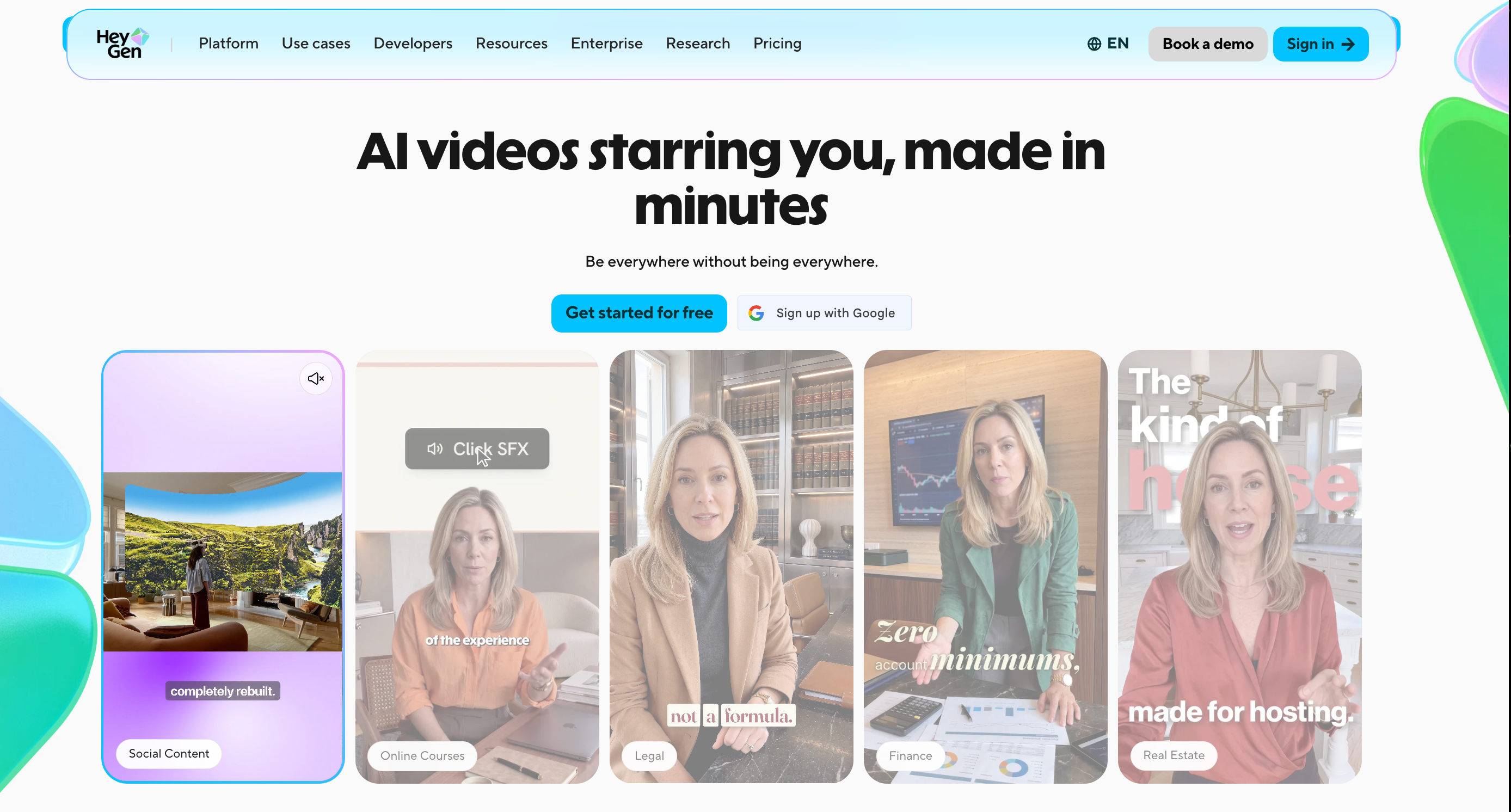
HeyGen is one of the most recognizable names in AI avatar video. If you have seen a polished AI spokesperson explaining a product, introducing a training module, or delivering a message in multiple languages, you have probably seen the type of workflow HeyGen helped popularize.
That success is deserved. HeyGen made AI presenter videos feel accessible to teams that did not want to book a studio, hire actors, record voiceovers, or edit talking-head footage from scratch. For sales teams, training departments, educators, and businesses that rely on clear presenter-led communication, HeyGen can be a practical tool.
But the same clarity that makes HeyGen useful can also become its limitation. HeyGen is strongest when the center of the video is a person speaking. Modern content workflows are broader than that. A product launch may need a cinematic teaser, a vertical social clip, a product demo, a talking avatar, a lip sync variation, and an image-to-video ad concept in the same campaign. If your video work is moving beyond avatar-led explainers, it makes sense to look for a HeyGen alternative with more creative range.
That is where Medeo becomes interesting.
Why People Use HeyGen in the First Place
HeyGen solves a real production problem: filming people is slow. Even a simple explainer video can require a script, camera setup, lighting, presenter, audio recording, retakes, editing, captions, and localization. For companies producing training videos, onboarding content, product explainers, sales messages, or multilingual communication, that process becomes expensive quickly.
HeyGen reduces that friction by replacing the camera setup with AI avatars and synthetic speech. The user can write a script, choose an avatar, select a voice, generate the video, and revise the message without bringing the presenter back for another shoot.
This is especially valuable when the message changes often. A sales script may need updates. A training video may need new compliance language. A product walkthrough may need localization. In those situations, a reusable AI presenter is a practical asset.
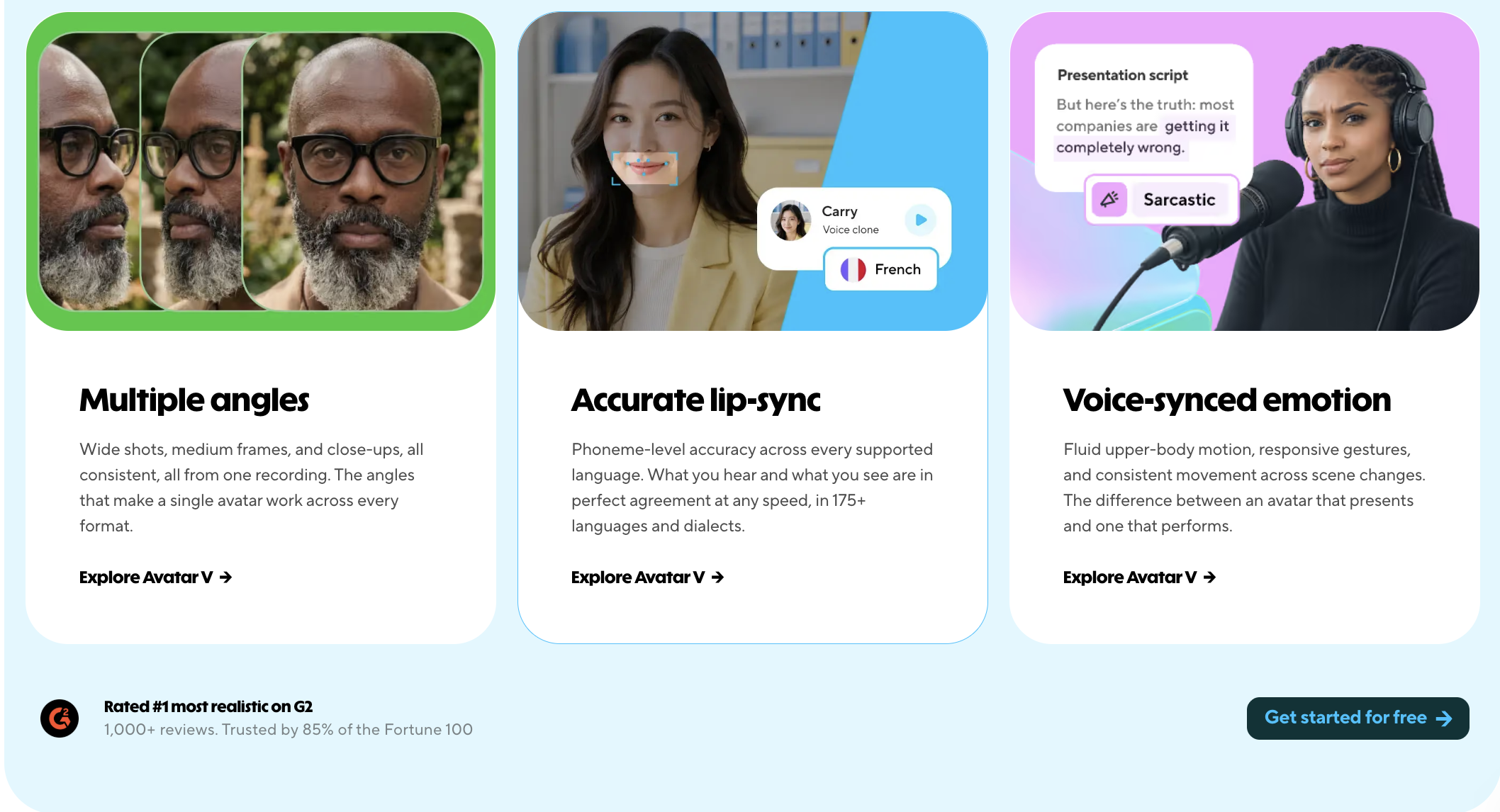
So the question is not whether HeyGen is useful. It clearly is. The better question is whether avatar-first video is the right foundation for every kind of content you want to create.
Where HeyGen Starts to Feel Narrow
HeyGen’s biggest strength is also the reason some users eventually need an alternative. It is excellent when the video is built around a presenter, but many creative briefs are not presenter-first.
A social media creator may want a surreal product clip, a short dramatic scene, a fashion image turned into motion, or a meme-style video. An ecommerce team may want product visuals where the product is the hero, not a presenter describing it. A marketing team may want to test different creative directions before deciding whether an avatar should appear at all. A filmmaker, designer, or content strategist may want visual scenes, motion concepts, cinematic camera movement, or AI model comparisons.
In those cases, starting with an avatar can feel like starting in the wrong place. The video becomes organized around speech instead of image, atmosphere, movement, product, story, or emotion.
That is usually why people search for a HeyGen alternative. They are not necessarily rejecting avatars. They are looking for a video platform where avatars are one option, not the entire creative frame.
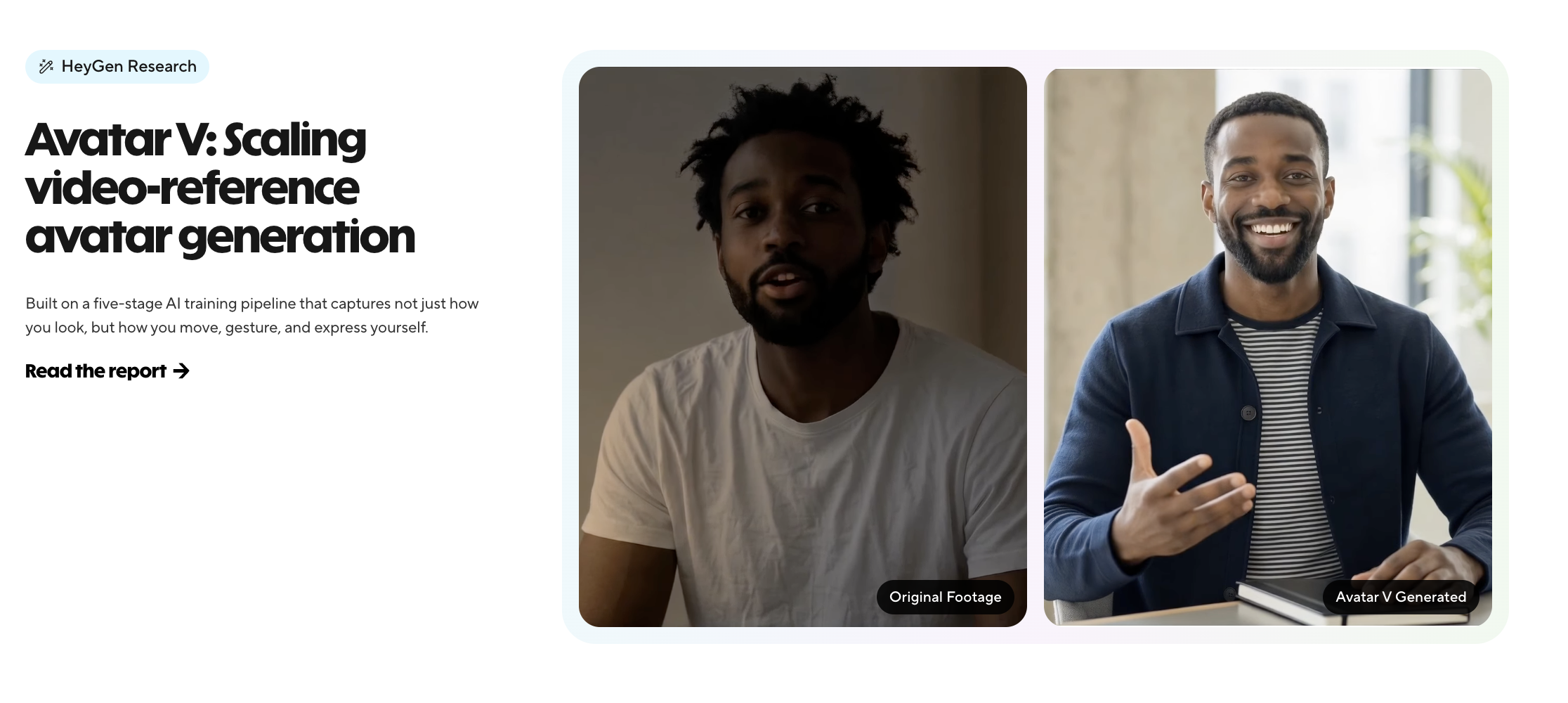
Medeo as a Broader HeyGen Alternative
Medeo is a better fit when your video workflow needs more than a talking-head generator. It supports avatar-style content, but it also gives creators different ways to begin: a prompt, an image, a URL, a product page, a script, or a creative idea.
That difference changes the workflow. Instead of asking, “What should the avatar say?” Medeo lets you ask, “What kind of video should this become?”
For some projects, the answer is a talking avatar. For others, it is an image-to-video clip, a product video, a social short, a cinematic prompt-generated scene, a lip sync video, or a visual concept built around a specific model. This makes Medeo more flexible for creators and marketers who produce different types of content instead of one repeated format.
If HeyGen is an AI presenter studio, Medeo is closer to an AI video creation workspace.
When a Talking Avatar Still Makes Sense
There are many situations where an AI presenter is still the right choice. If you are explaining a software feature, introducing a course, summarizing a policy, or creating an internal training video, a clear speaker can make the content easier to follow.
Medeo’s talking avatar workflow is useful in those cases because it lets you create presenter-led videos without leaving a broader AI video environment.
Medeo Talking Avatar
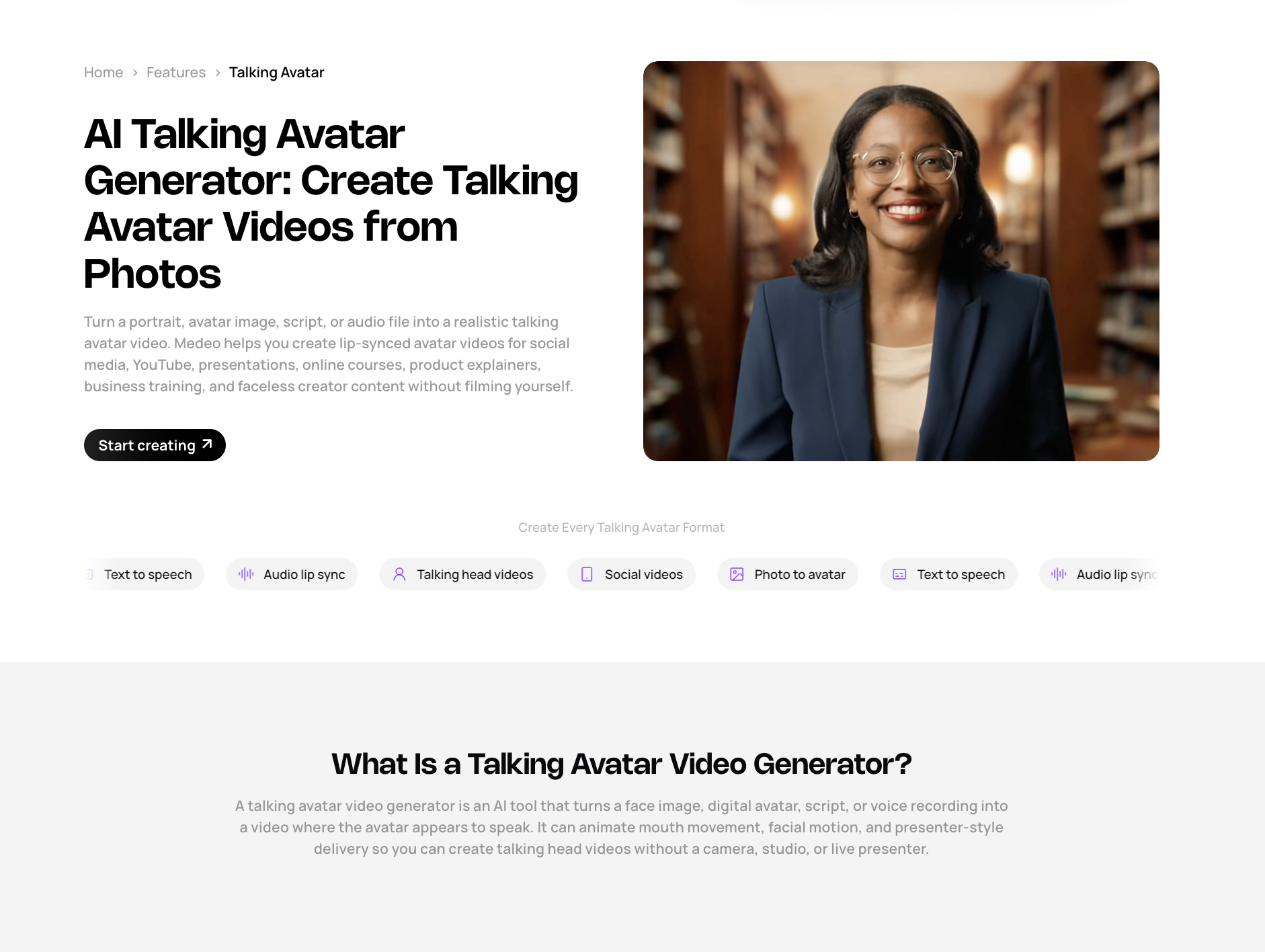
The advantage is not only that Medeo can create avatar content. The advantage is that you are not locked into avatar content. If the same campaign later needs a visual teaser, a product clip, or an image animation, you can continue inside Medeo instead of switching tools.
That matters for teams that do not want a separate platform for every format.
Why Lip Sync Matters in a HeyGen Alternative
One reason HeyGen became popular is that people want AI faces to speak convincingly. Lip sync is not a small detail. If the mouth movement feels wrong, the whole video feels artificial, even if the script and voice are good.
Medeo’s lip sync feature is useful for creators who want faces, characters, or avatar-style scenes to match speech more naturally.
Medeo Lip Sync:
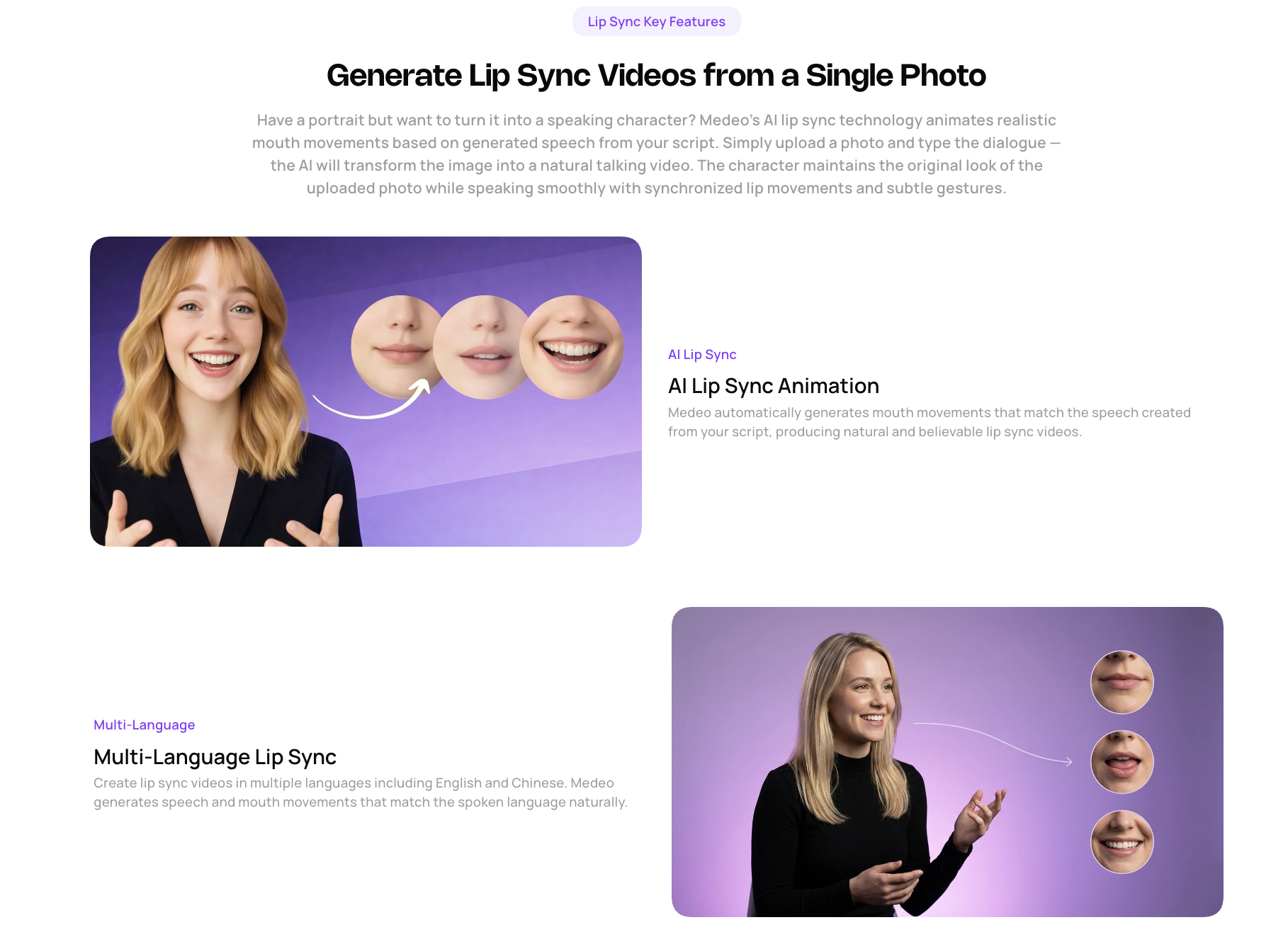
This is especially relevant for localized content, character videos, music-related clips, social edits, and AI spokesperson content. It also gives creators more flexibility than a standard avatar template because lip sync can support different visual styles and source materials.
The point is not that every video needs lip sync. The point is that a strong HeyGen alternative should let speech and visuals work together without forcing every project into the same avatar layout.
Text-to-Video Is Where the Workflow Opens Up
The biggest difference between HeyGen and Medeo appears when the video does not start with a speaker. Suppose you want to create a cinematic scene, a product mood video, a fantasy visual, a dramatic short, or a stylized social clip. In that case, writing a presenter script is not the best starting point.
Medeo’s text-to-video workflow lets you describe the actual scene. You can define the subject, setting, motion, lighting, camera movement, tone, and pacing.
Medeo Text to Video:
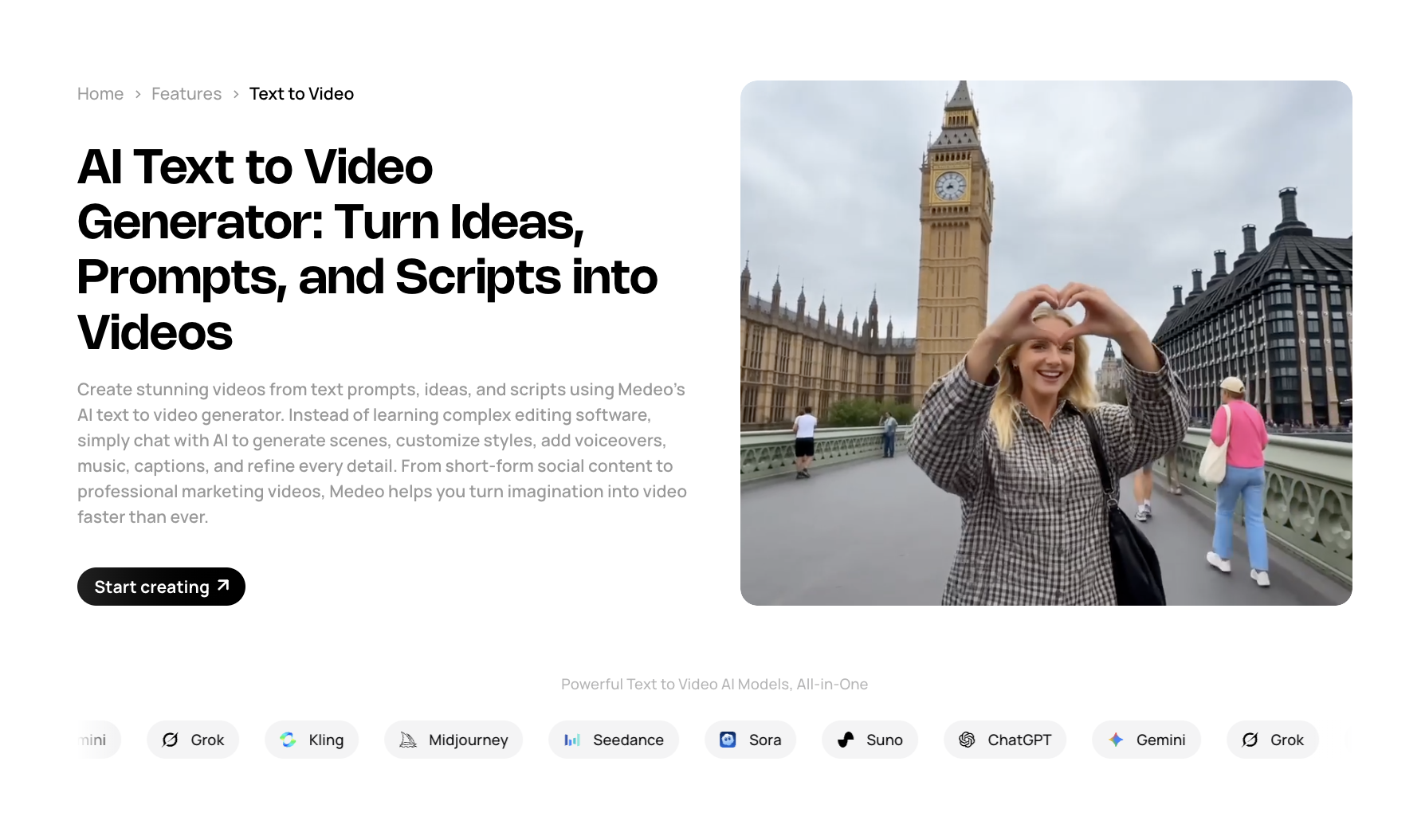
This is useful because many modern videos are driven by visuals first and words second. A TikTok ad may need a strong opening image. A product teaser may need atmosphere. A short story may need a scene. A campaign concept may need several visual directions before the script is final.
HeyGen can help deliver a message. Medeo can help shape the visual idea itself.
HeyGen vs Medeo: The Real Difference
The simplest way to compare the two is this: HeyGen is optimized for communicating through AI presenters. Medeo is optimized for creating videos from different kinds of inputs.
That means HeyGen is often the better choice for structured business communication. If your company needs training modules, onboarding videos, sales explainers, or localized presenter videos, HeyGen is very strong.
Medeo is better when the content mix is broader. If you need avatar videos one day, image-to-video the next, product videos after that, and prompt-generated social content in between, Medeo is more flexible.
This is why Medeo works well for creators, ecommerce teams, social media managers, agencies, and marketers who do not want their entire video strategy shaped around one format.
Who Should Choose Medeo Instead of HeyGen?
Medeo is a good choice if your video projects often change format. You may need an AI presenter for one asset, but you also need product clips, visual stories, image animation, lip sync edits, and social videos.
It is also a good fit if your creative process starts from visuals rather than scripts. Product photos, AI images, character concepts, landing pages, and campaign references can all become video inputs.
HeyGen is still a strong choice if most of your videos are presenter-led. But if you are starting to feel that an avatar is only one part of your creative workflow, Medeo gives you more space to build.
Is Medeo a Free HeyGen Alternative?
Medeo lets users start with free trial credits, so it can be tested before committing to a larger workflow. It is not an unlimited free replacement for HeyGen, and the actual cost depends on what you generate, which models you use, and how often you revise.
That is true for most serious AI video tools. The better question is not simply “Which one is free?” but “Which one gives me usable output with fewer tool switches and fewer dead-end drafts?”
If your work includes multiple video formats, a flexible platform can save time even when individual generations use credits.
Final Verdict
HeyGen is one of the strongest tools for AI avatar videos. It is polished, recognizable, and genuinely useful for business communication, training, sales, and localization.
But HeyGen is not always the best answer when the video needs to be more than a presenter speaking to camera. Many creators now need visual-first content: product videos, cinematic scenes, social clips, image animations, lip sync videos, and prompt-based video generation.
That is where Medeo is the stronger alternative. It does not replace HeyGen by copying only the avatar workflow. It offers a wider creative system where avatars, lip sync, text-to-video, image-to-video, and product videos can live together.
Use HeyGen when the presenter is the main point of the video.
Use Medeo when the idea can become many kinds of videos.
FAQ
What is the best HeyGen alternative?
Medeo is a strong HeyGen alternative for creators who need more than AI avatars. It supports talking avatars, lip sync, text-to-video, image-to-video, and product video workflows, making it more flexible for mixed creative projects.
Is Medeo better than HeyGen?
Medeo is better if you need flexible AI video creation across many formats. HeyGen is better if your main goal is realistic avatar-led business videos. The right choice depends on whether your workflow is presenter-first or content-first.
Can Medeo create AI avatar videos?
Yes. Medeo supports talking avatar videos for explainers, education, tutorials, marketing content, and social messages.
Can Medeo do lip sync videos?
Yes. Medeo offers a lip sync workflow that helps match speech with faces or characters, which is useful for avatar videos, character clips, translation-style content, and creative edits.
Why would someone look for a HeyGen alternative?
People usually look for a HeyGen alternative when they want more creative control, different video formats, better image-to-video workflows, product videos, broader AI generation, or a platform that is not centered only on avatars.
Is HeyGen mainly for business videos?
HeyGen is widely used for business videos, training, onboarding, sales, explainers, and localization. It can be used creatively too, but its strongest fit is presenter-led communication.
Can Medeo create videos from images?
Yes. Medeo’s image-to-video workflow lets users animate product photos, portraits, AI images, concept art, and campaign visuals into short videos.
Can Medeo create product videos?
Yes. Medeo includes product video workflows for ecommerce, marketing, social media, ads, and product storytelling.
Is Medeo good for social media videos?
Yes. Medeo can support short-form content for TikTok, Instagram Reels, YouTube Shorts, and other social platforms, especially when creators need multiple formats from different inputs.
Should I use HeyGen or Medeo?
Use HeyGen if your main output is AI presenter videos. Use Medeo if you need a broader AI video workflow that includes avatars but also supports visual storytelling, image animation, product videos, lip sync, and prompt-based generation.